
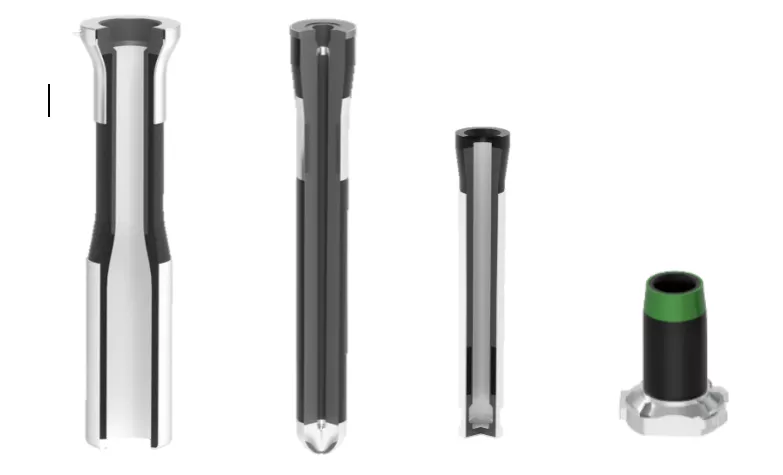
Product Data
| Item | Ratio | Typical range |
| SiO2 | % | 63.0-67.0 |
| Al2O3 | % | 5.5-9.5 |
| ZrO2 | % | 4.0-6.0 |
| CaO | % | 2.0-3.0 |
| B2O3 | % | 8.5-12.5 |
| Na2O/K2O | % | 5.0-9.0 |
| Others | % | ≤3.5 |
Typical Applications
Refractory glazes are widely applied to protect ladle shrouds (LS), stoppers and submerged entry nozzles (SEN) during preheating and continuous casting at high temperatures up to 1300 ℃.


FAQs about Refractory Glazes
1、 What temperature can refractory glazes withstand?
Depending on the formulation, refractory glazes can typically withstand temperatures ranging from 800°C up to 1300°C or higher.
2、Can refractory glazes improve energy efficiency?
Yes. refractory glazes can improve thermal efficiency and lower fuel consumption in high-temperature equipment.
3、What is the main purpose of refractory glazes?
They are used to protect refractory surfaces from slag penetration, chemical corrosion, abrasion, and thermal shock, while also extending the service life .
